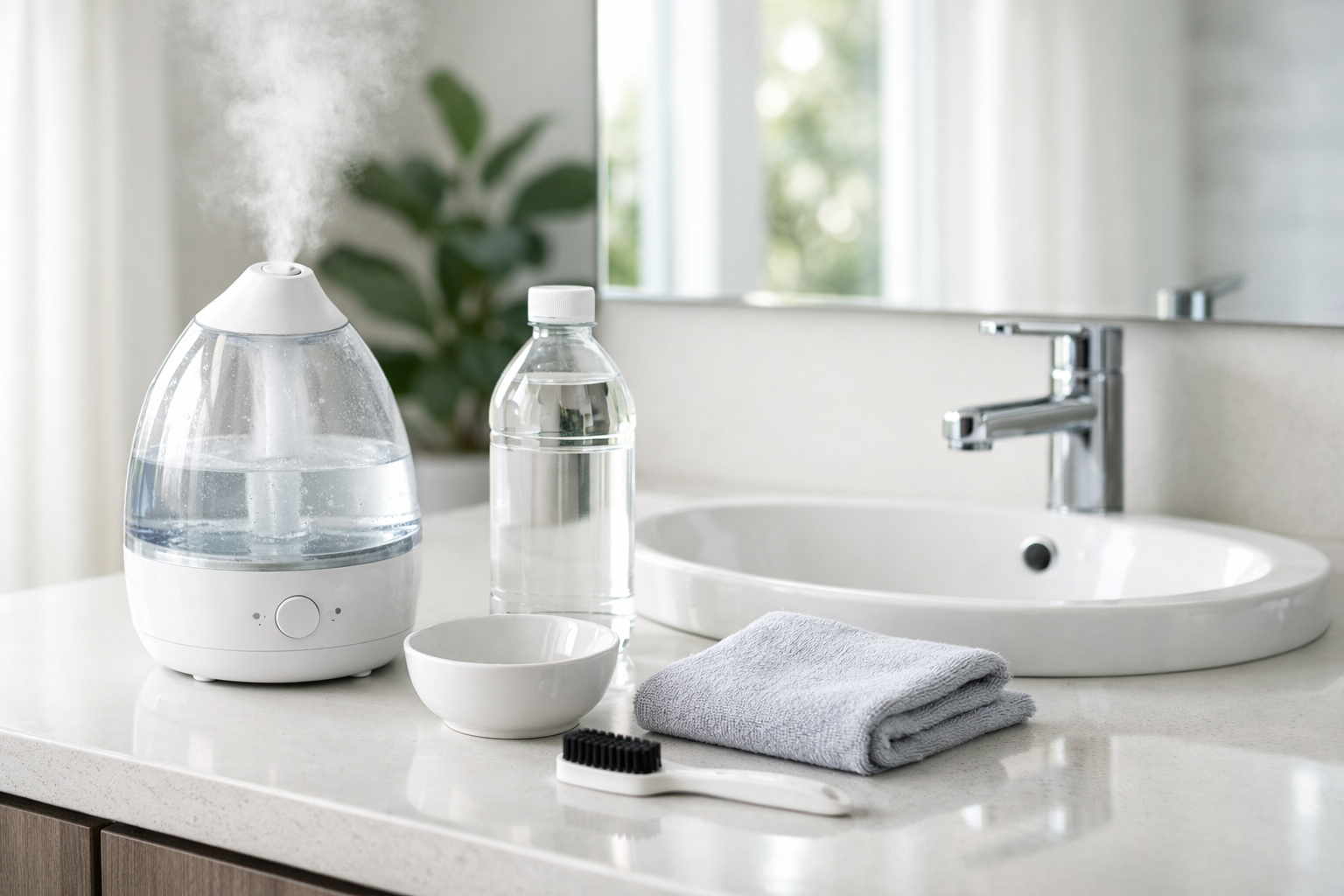
A humidifier can make bedrooms and nurseries feel dramatically better—until it starts smelling weird, leaving white dust everywhere, or causing slimy buildup. The fix isn’t complicated, but it does need consistency. Here’s how to clean a humidifier properly so it stays safe, odor-free, and doesn’t leave white dust.

This guide gives you a simple daily + weekly cleaning routine, explains what causes white dust, and shows how to keep your humidifier running safely and efficiently.
Disclosure: This post may contain affiliate links. As an Amazon Associate I earn from qualifying purchases.
Quick answer: how to clean a humidifier daily
If you only do one thing, do this:
Daily (2 minutes):
- Empty the tank
- Rinse with clean water
- Wipe it dry if possible
- Refill with fresh water
This reduces the chance of microorganisms growing in stagnant water and keeps performance consistent.
👉 If you’re still shopping for a model that’s easy to clean, see my roundup here:
10 Best Humidifiers for Bedroom, Baby, Large Rooms & More (2026)
Daily: Empty + rinse + refill
Weekly: Vinegar soak 20–30 min + scrub + rinse + air dry
White dust: Distilled water → cartridge → evaporative
👉Cleaning Supplies I Use (Optional but makes it easier)
- White vinegar (descale)
- Soft bottle brush / cleaning brush
- Cotton swabs (base cleaning)
- Demineralization cartridge (if supported)
- Hygrometer (to keep humidity in range)
Why humidifiers get gross (and why white dust happens)
1) Biofilm (slimy buildup)
Warm, wet surfaces + sitting water can create film and odor over time.
2) Mineral scale (hard-water buildup)
Tap water contains minerals that leave crusty deposits inside the tank and base.
3) White dust (ultrasonic humidifiers)
White dust is usually mineral particles from hard water that become airborne and settle on surfaces. It’s common with ultrasonic cool mist models.
👉 Not sure if you should use cool mist or warm mist?
Read: Cool Mist vs Warm Mist: Pros, Cons, Safety, and What to Buy (2026)
The simple cleaning schedule that actually works
Daily (best habit)
- Empty old water
- Rinse tank
- Refill with fresh water
- Don’t leave water sitting for long periods if you can avoid it

CDC says to empty humidifiers daily, clean regularly, and let them air dry.
Weekly (deep clean)
Do this once a week (or more often if you have hard water):
Supplies: white vinegar, soft brush, microfiber cloth, cotton swabs
Time: 10 minutes active + 20–30 minutes soak
Frequency: daily rinse + weekly descale
Step 1: Unplug + disassemble
First, turn it off, unplug it, and separate the tank from the base.
Step 2: Descale mineral buildup

Next, fill the tank with a mix of:
- Use a 1:1 vinegar + water mix for general descaling (or straight vinegar on heavy scale).
Let it sit for 20–30 minutes, then gently scrub with a soft brush.
Avoid harsh abrasives that can scratch plastic.
Step 3: Rinse thoroughly
Then, rinse until the vinegar smell is completely gone.
Step 4: Clean the base carefully

Finally, use a cloth or cotton swab for the base (don’t pour water into electrical parts). Wipe gently.
Step 5: Air dry
Let all parts dry before reassembling.
How to stop white dust (best methods)
If white dust is your biggest problem, do one of these:
Best option: distilled water
Distilled water dramatically reduces mineral dust.
Second best: demineralization cartridge (if supported)
However, if that doesn’t work, some models allow a cartridge that reduces minerals.
Third: switch to evaporative style
Alternatively, evaporative humidifiers often avoid white dust because the wick traps minerals (but the wick needs replacement).
If your room has lots of white dust:
Don’t keep turning the mist to max. Fix the water source first.
What NOT to do
- Don’t add essential oils directly into the tank unless the manufacturer explicitly supports it (oils can damage many units).
- Don’t use bleach/vinegar together.
- Don’t soak the base if it contains electronics.
Always check your model’s manual for the safest cleaning method.
“My humidifier smells bad” — quick fix
If it smells musty or sour:
- Deep clean (vinegar soak + scrub)
- Rinse thoroughly
- Run it with distilled water for the next few days
- Make sure it fully dries between uses when possible
If the smell returns quickly, your water quality or cleaning frequency likely needs adjustment.
FAQ
How do I clean a humidifier with vinegar (what ratio should I use)?
For most humidifiers, white vinegar is the safest, simplest descaler for mineral buildup.
A practical method is:
- If you have heavy scale: pour enough white vinegar to cover the mineral-stained areas in the base and let it sit 20–30 minutes.
- If you want a gentler mix: use a 1:1 mix of white vinegar + warm water, then soak 20–30 minutes.
After soaking, scrub with a soft brush, rinse thoroughly, and air-dry completely. Always check your user manual first (some bases have “do not soak” instructions).
How do I remove mold from a humidifier safely?
If you see mold, slimy residue, or smell a musty odor:
- Unplug and empty the tank immediately.
- Wash tank + parts with warm soapy water.
- Descale/disinfect with white vinegar soak (20–30 minutes), then scrub gently.
- Rinse extremely well and let everything air-dry fully before reassembling.
Important: Do not mix cleaners (especially bleach + vinegar), and avoid harsh chemicals unless your manual specifically allows them.
Can I use essential oils in my humidifier?
Only if your humidifier is designed for essential oils (usually an aroma tray/pad).
If it’s not oil-safe, essential oils can:
- damage plastic parts and seals
- leave residue that’s hard to remove
- reduce lifespan and performance
If you want scent, use an oil-safe diffuser or an aroma tray model—not the main tank.
How often should I clean my humidifier?
A good routine that prevents smell, mold, and white dust:
- Daily: empty tank, quick rinse, wipe dry if possible
- Weekly: deep clean + descale (vinegar soak, scrub, rinse)
- Every refill: use fresh water (don’t “top off” old water)
Why does my humidifier smell bad (even after cleaning)?
Common causes:
- Water sitting too long in the tank
- Biofilm buildup in corners/valves
- Hard-water minerals causing residue
Fix: - Do a vinegar soak (20–30 min), scrub seams/valves, rinse well
- Let the tank/base dry completely between uses
- Switch to distilled water if smell keeps returning
How do I stop humidifier white dust?
White dust usually happens when an ultrasonic humidifier uses hard tap water (minerals get turned into fine particles).
Best fixes:
- Use distilled or demineralized water
- Use a demineralization cartridge (if your model supports it)
- Consider an evaporative humidifier (typically produces less white dust)
Tip: a small hygrometer helps you avoid over-humidifying (which can create other issues).
If you want my top low–white-dust picks, see my 10 Best Humidifiers (2026) guide👉
Do I need a hygrometer for my humidifier?
You don’t need one, but it’s one of the cheapest upgrades that improves results. It helps you:
- confirm if your room is actually dry
- avoid running a humidifier too high
- keep humidity in a comfortable range (generally 30–50%)
Want to keep humidity in the safe comfort zone? Here’s the hygrometer I use 👇
Can I use tap water in a humidifier?
You can, but it depends on your water hardness:
- If you notice white dust or mineral buildup quickly, switch to distilled water.
- Tap water often means more frequent cleaning/descaling.
What if my humidifier has a filter—how do I clean or replace it?
- Do not wash disposable wick filters unless the manual says it’s washable.
- If the filter smells musty, looks discolored, or performance drops, it’s usually time to replace it.
- Keep the base clean—filters won’t fix a dirty reservoir.
EPA warns not to exceed 50% indoor humidity (higher humidity can encourage biological growth).
Final recommendation
If you want the easiest ownership experience, choose a model that’s top-fill and easy to disassemble, then stick to the daily rinse + weekly clean routine.
👉 Best Humidifiers by room type (bedroom, baby, large rooms):
10 Best Humidifiers for Bedroom, Baby, Large Rooms & More (2026)
👉 Still deciding cool vs warm mist?
Cool Mist vs Warm Mist: Pros, Cons, Safety, and What to Buy (2026)


Leave a Reply